This is a very rare case: a literary word born in a relatively small language becomes the global term for one of the central images of technological modernity. What makes it even more interesting is that "robot" did not only travel as a technical word. It carried with it a cultural shadow: the idea that human labour can be replaced, organized, automated and perhaps dehumanized. For that reason, it is not just a linguistic borrowing; it is a small capsule of Czech twentieth-century culture that entered the vocabulary of the whole planet. [1] [2]
Beer, dance and pastries: Czech in everyday life
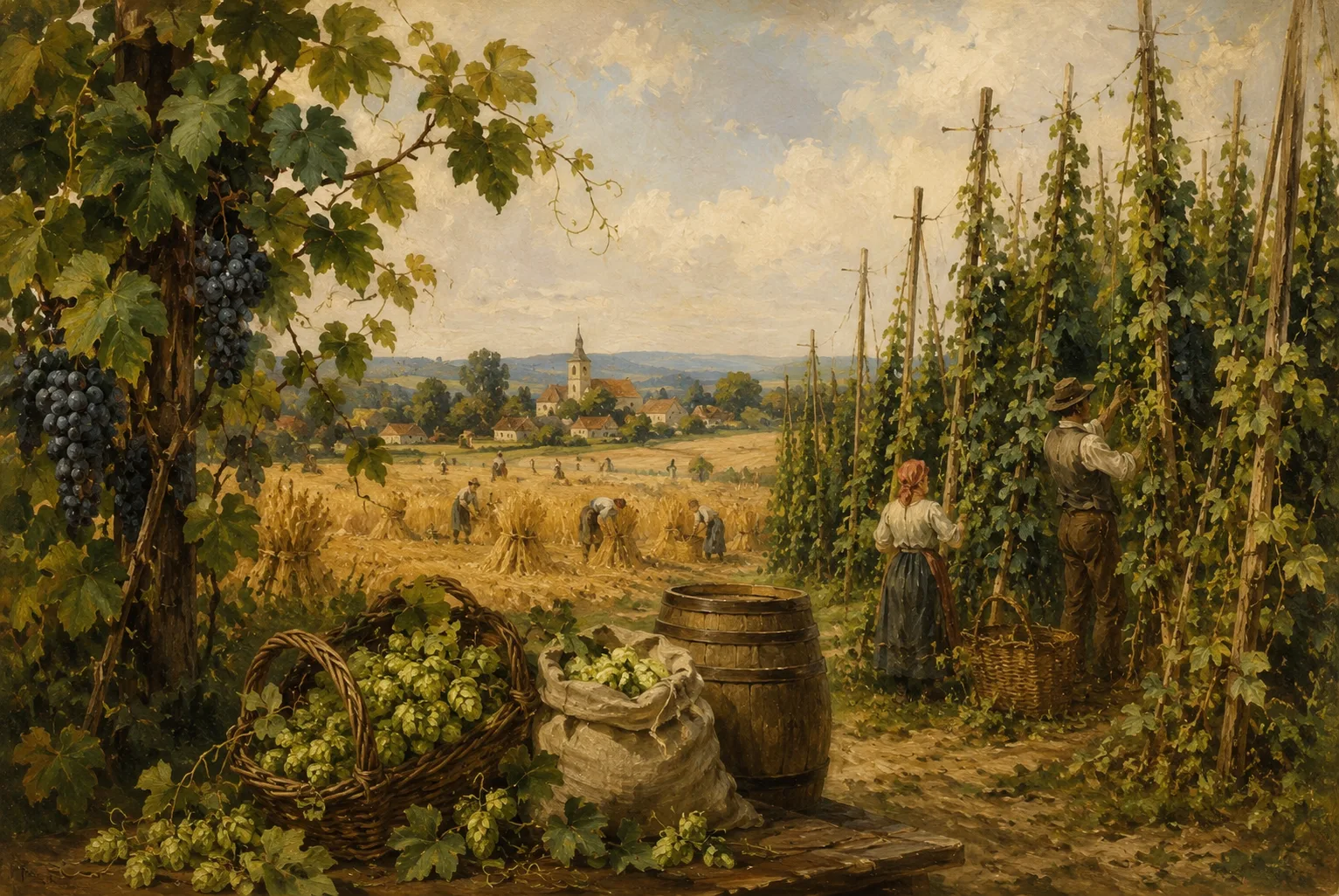
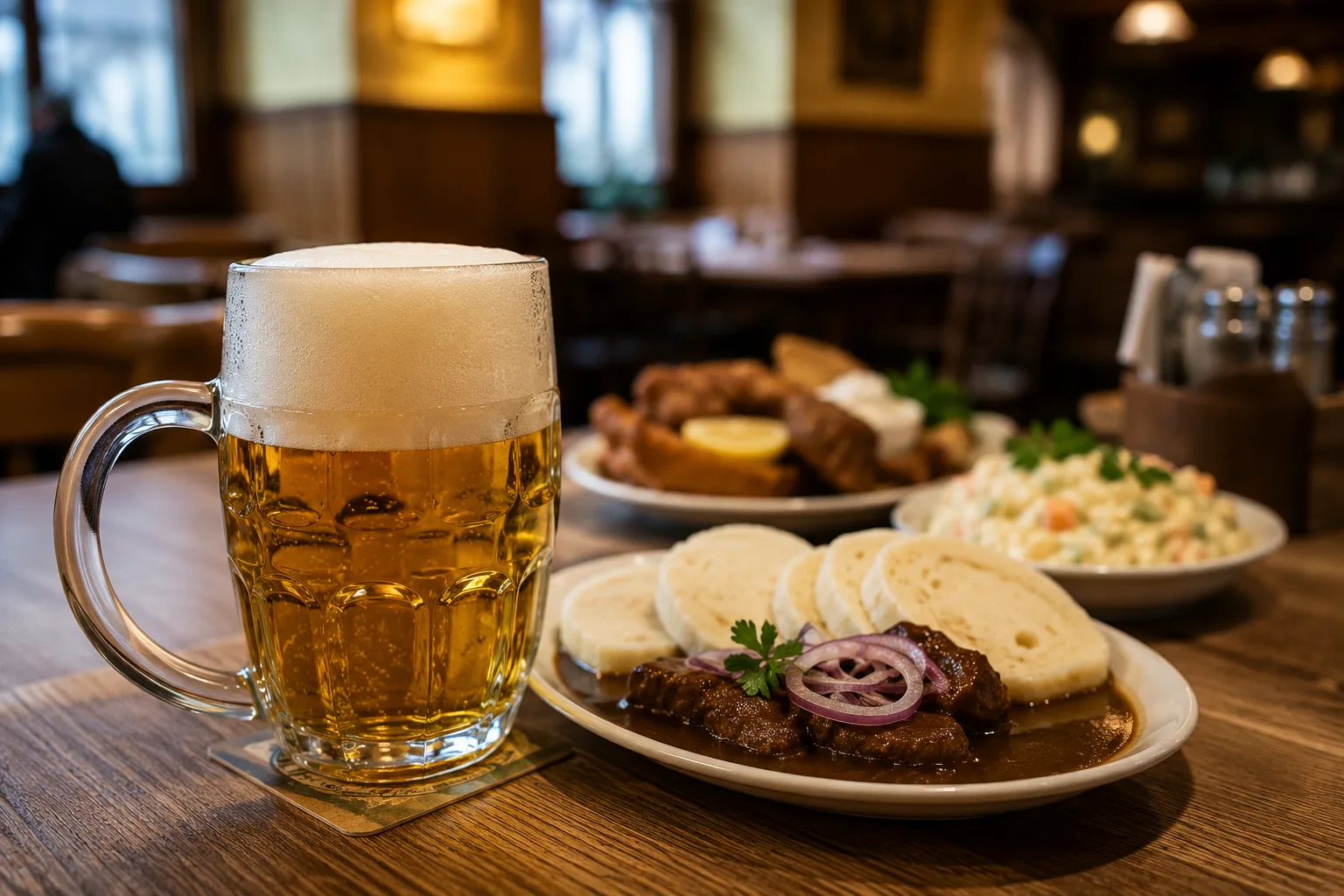
Not every Czech word that spread around the world has the dramatic tone of robot. Some are far more convivial. Pilsner, or pilsener, is a perfect example: it names a style of pale bottom-fermented beer that originated in Plzeň, German Pilsen, in 1842. Today "pils", "pilsner" and "pilsener" appear on beer labels produced in Europe, America and Asia; many drinkers no longer connect the name with the Bohemian city, but the geographical origin is still there, hidden in the word.
A similar, though etymologically more debated, case is polka. The dance spread in the nineteenth century from Bohemia to the rest of Europe and then to America; some sources link the name to Czech půlka, "half" or "half-step", while others connect it with Polka, "Polish woman". In any case, the term became international through music, popular dancing and nineteenth-century urban culture.
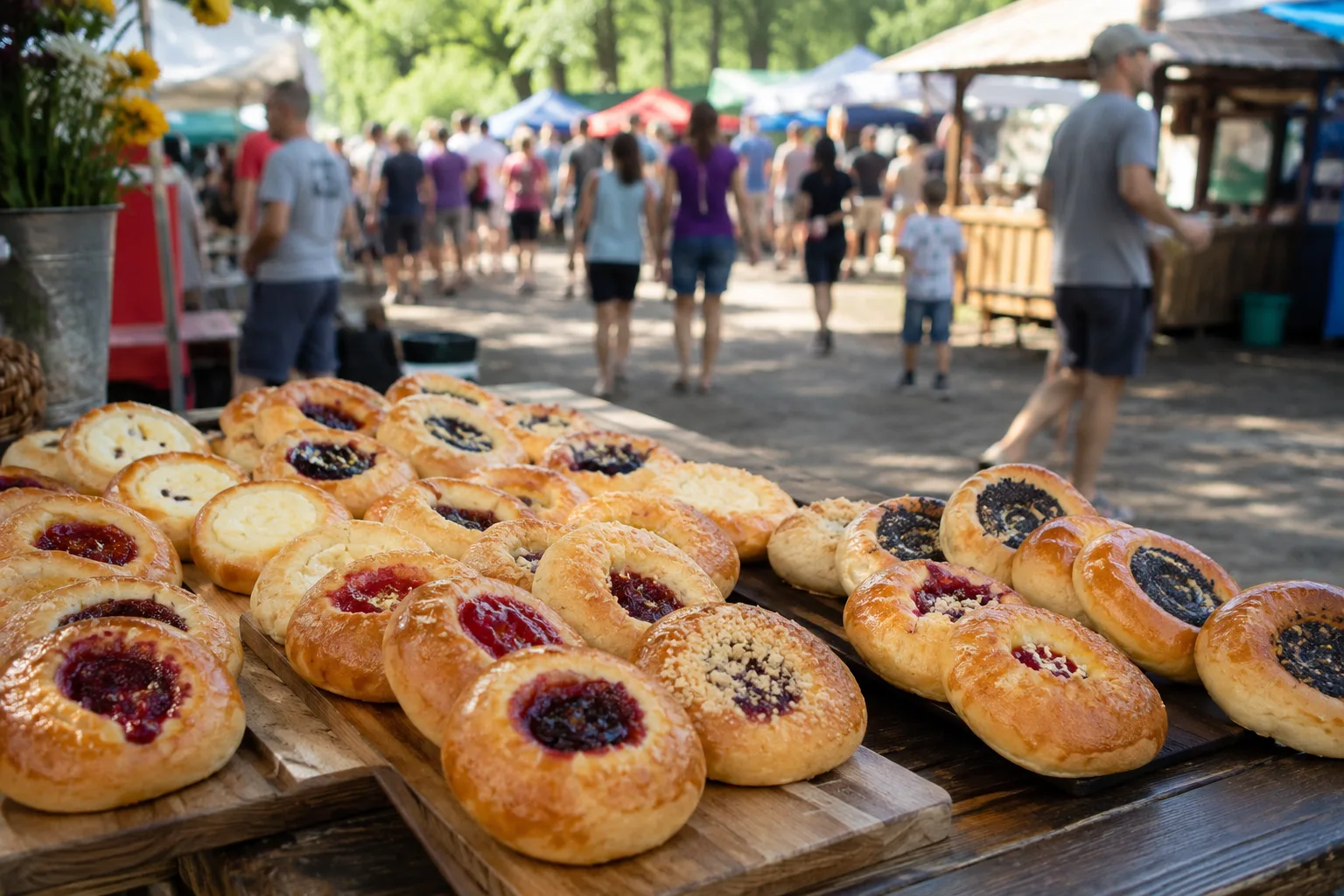
More domestic, but very visible in the United States, is kolache or kolacky, from Czech koláč, a round pastry connected with the Slavic root kolo, "wheel" or "circle". In Texas and the American Midwest, kolache have become part of the local food identity of Czech communities and their descendants. Here language travels through taste: not through universities and dictionaries, but through bakeries, town festivals, family kitchens and recipes that migrated with people. [3] [4] [5] [6] [7]
Weapons, technology and words born in hard times
There is also a less pleasant but linguistically important group: words that entered international languages through war, military technology or industry. Howitzer is traced back to Czech houfnice, a term linked to artillery and the military tradition of Central Europe. Through German and Dutch, the word reached English and became a stable technical term. Pistol is also often connected with Czech píšťala, literally "whistle" or "pipe", but also used for a type of firearm in the Hussite period; here, however, caution is necessary, because the etymology passed through French and German and not all reconstructions present the same degree of certainty.
The most modern case is Semtex, the trade name of a plastic explosive produced in Czechoslovakia and associated with the area of Semtín, near Pardubice. Unlike robot or pilsner, Semtex is not a "beautiful" word to export: it became famous for heavy historical and political reasons linked to the Cold War, security and terrorism. But that is exactly why it proves something important: words travel even when we dislike what they carry. They may enter languages as technical names, brands, acronyms or journalistic terms. A loanword is not always a positive monument; sometimes it is simply the cold, concrete trace of a product or technology that had an international impact. [8] [9] [10] [11]
The "dollar" and Bohemia: not quite a Czech word, but almost a Czech story
The case of dollar deserves its own category. It would be too simple, and not quite correct, to say that "dollar" is a Czech word, because the linguistic chain passes mainly through German Joachimsthaler, later shortened to Thaler. Still, the place of origin matters enormously: Jáchymov, in Bohemia, a mining town famous for the silver coins minted there from the sixteenth century onward. In Czech, those coins were called tolar, a form that coexisted with the German-speaking world of the time. From Thaler came monetary names in several languages, eventually including English dollar.
Here we do not have a "pure" Czech word entering the world directly, but a Bohemian story that moves through empires, mines, trade, administrative languages and monetary circulation. It is a useful example because it forces us not to oversimplify. Words do not always travel in a straight line: they often pass through bilingual regions, multinational states, imperfect translations, local pronunciations and commercial usage. Historical Bohemia was not an isolated linguistic laboratory; it was a crossroads of Czech, German, administrative Latin, mining culture and European trade networks. That is why the "dollar" is not a Czech word in the same way as robot, but it is still one of the strongest traces left by a Czech place in the language of the global economy. [12]
Direct borrowings, indirect borrowings and memory hidden in words
If we put these examples together, a small linguistic geography appears. Some words are direct or almost direct borrowings, such as robot from robota or kolache from koláč. Others are place names turned into universal categories, such as pilsner, which moves from Plzeň to become a beer style. Others are technical words that passed through several languages, such as howitzer and perhaps pistol. Finally, there are indirect cases such as dollar, where Bohemia provides the place and the story, but the international form comes through German.
What is most striking is the range of fields these words cover: theatre and technology, beer, music, pastries, weapons, explosives, money. There is no single "Czech route" into the world's vocabulary. Sometimes art creates a word; sometimes industry does; sometimes emigrants do; sometimes a city does; sometimes a product does. And often, once a word succeeds, it loses its passport: people who say robot do not think of Čapek, people who order a pilsner do not always think of Plzeň, and someone eating a kolache in Texas may not know how to pronounce koláč. But language works this way too: it preserves memories that everyday use no longer explains. Stop for a moment, and inside apparently ordinary words a small Czech story opens up. [1] [5] [8] [12]
Bibliography







Discussion
Join discussion!
There are already 0 comments on this article in the forum.